Radon and Basement Renovations in Calgary: What Homeowners Should Know Before They Dig In
A basement renovation is one of the biggest investments a Calgary homeowner can make — adding living space, a rental suite, or the home office you have been wanting. But there is an invisible variable that too few homeowners consider before they pour concrete, frame walls, or install flooring: radon. If your basement reno does not account for the gas seeping up from the soil beneath Calgary's homes, you could be building a beautiful trap for the second-leading cause of lung cancer in Canada. This guide walks through what every Calgary homeowner needs to know before the first hammer swings.
Why Basement Renovations and Radon Are Connected
Radon enters a home through the lowest level in contact with the ground. In Calgary, where most single-family homes sit on a concrete slab or have a basement foundation, that lowest level is exactly where the renovation is happening. Radon is produced by the decay of uranium in the soil, and much of Alberta sits on geology that generates it in significant quantities. When you finish a basement — adding flooring, drywall, and sealed living space — you are altering the very surfaces through which radon enters and the airflow patterns that determine where it concentrates.
The connection is direct: you are spending thousands of dollars to turn the highest-radon zone of your Calgary house into a living space. Doing that without a radon test first is a gamble.
Test Before You Renovate — Every Time
The single most important radon-related renovation rule in Calgary is simple: test before you build. A long-term test — 90 days minimum, using a Health Canada-approved alpha-track detector — gives you the number that should inform every decision that follows. Place the detector in the lowest lived-in level of your home during heating season, when Calgary's stack effect pulls more soil gas indoors.
Why test before renovating rather than after?
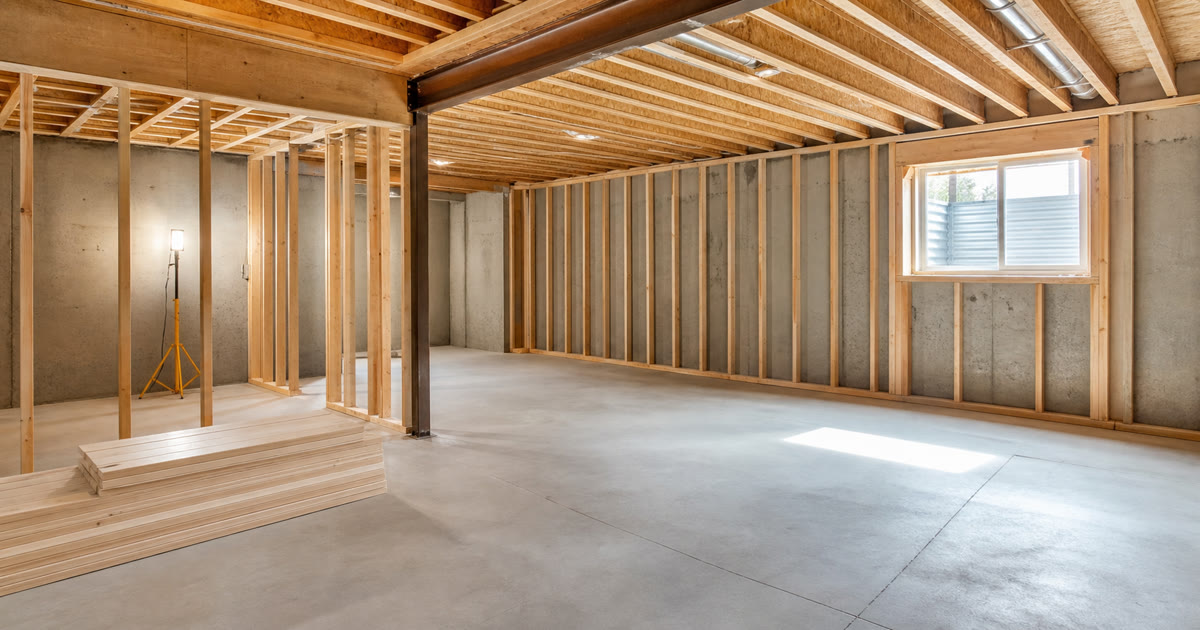
You can build mitigation into the reno. If your pre-renovation test comes back above Health Canada's 200 Bq/m³ guideline, you have a rare opportunity: install the mitigation system while the basement is already opened up. The cost is lower when walls are unfinished and routing a pipe is straightforward, and the finished product hides everything behind drywall.
You avoid finishing a high-radon space. A Calgary family in Haysboro or Brentwood who spends weekends converting the basement into a playroom only to discover afterward that radon levels are at 350 Bq/m³ now faces a dilemma: tear open newly finished walls to install a pipe, or run an exterior system that may be less ideal.
You protect renovation workers. Contractors spending eight hours a day in an unmitigated basement for weeks of reno work are breathing whatever the soil is releasing. A test protects the people building your space.
How a Basement Renovation Can Change Radon Levels
Finishing a basement does not simply leave radon levels where they were. Calgary homes are subject to the stack effect — warm air rising through the house pulls soil gas in through the foundation like a slow vacuum. A renovation can shift this dynamic in several ways.
Sealing the Slab
When you install flooring, you are adding a barrier over the concrete. If radon entry points exist — cracks, unsealed sump pits, gaps around plumbing penetrations — sealing them as part of the reno can actually reduce radon entry. However, concrete is porous, and a finished floor alone does not block radon gas from diffusing through the slab. Do not count on new flooring as a radon solution.
Changing Air Pressure
A newly finished basement with tight drywall and sealed windows traps air differently than an open, unfinished space. If the HVAC system is adjusted, or if a bathroom fan or dryer is run in the basement, pressure imbalances can pull more soil gas inside. Calgary homes already face this effect strongly during winter; a sealed basement without pressure management can amplify it.
Adding Bedrooms Below Grade
If the renovation adds a basement bedroom, someone may now be sleeping seven or eight hours a night in the room where radon levels are highest. Health Canada's guideline of 200 Bq/m³ applies to rooms where people spend four or more hours per day. A basement bedroom crosses that threshold easily — which makes pre-renovation testing not just a good idea, but a responsibility.
Radon-Ready Features Worth Adding During a Reno
If you are opening up the basement floor or walls anyway, a few radon-smart additions cost very little and pay off for decades.
Radon Rough-In
The Alberta Building Code now requires a radon rough-in in new homes, but if your Calgary home was built before 2015 [ПРОВЕРИТЬ: точный год требования AB Building Code], it almost certainly does not have one. A rough-in is a capped pipe extending through the slab into the gravel layer below, labelled and ready for a future fan. If you need mitigation now, the pipe is already there. If your pre-reno test comes back low, the rough-in sits there as cheap insurance — if levels rise over time, adding a fan is a one-hour job.
Sub-Slab Communication Layer
If you are pouring new concrete — for an addition, a bathroom rough-in, or a sump relocation — ensure a layer of clean gravel under the slab allows air to move horizontally. Without good sub-slab communication, even the best radon fan struggles to pull from the full footprint of the home. Calgary's soil types vary by neighbourhood, and tighter clay-rich soils in some areas limit natural communication; gravel makes a real difference.
Sump Pit Sealing
Every Calgary home with a sump pump has a radon entry point unless the pit is sealed with an airtight lid. During a renovation, replacing an open sump with a sealed basin and a proper lid that accommodates the pump and a radon suction point is straightforward and inexpensive. An open sump in a finished basement is both a radon pathway and a missed mitigation opportunity.
Mitigation During Renovation vs After
If your pre-renovation test returns a result above 200 Bq/m³, you have two paths. Understanding the trade-offs in a Calgary context helps the decision.
Installing During Renovation (Ideal)
With walls open, a C-NRPP certified radon professional in Calgary can route the system entirely inside the building envelope. The pipe runs inside a wall cavity from the slab to an attic or roof discharge. No exterior penetrations. No visible piping. No exposed fan on an outside wall. This is the cleanest outcome — efficient, quiet, and invisible once the drywall goes up.
Installing After Renovation (Still Works)
If you skipped testing or your post-reno test is the first one, a system can still be installed. In Calgary, the most common approach for finished basements is an interior installation through a utility room with an exterior fan, or a fully exterior run. It works just as well from a radon-removal standpoint, but it shows. The pipe is visible, the fan is outside, and the installation is slightly more involved.
The same system that might cost a Calgary homeowner roughly $2,000 to $3,000 alongside a renovation can be 20 to 30 percent more if installed afterward, simply because of the additional labour required to work around finished space [ПРОВЕРИТЬ: точный процент разницы].
Special Considerations for Calgary Neighbourhoods
Calgary's housing stock is not uniform, and neither is its radon profile.
Older neighbourhoods — Brentwood, Haysboro, Acadia, Falconridge, Forest Lawn. Homes built in the 1950s through 1980s typically have concrete foundations that have had decades to develop cracks and settlement gaps. The sump pits, if present, are often unsealed. These homes benefit most from pre-renovation testing because the entry points are well-established and the radon pathways are mature. A reno in one of these Calgary neighbourhoods should absolutely include a radon plan.
Newer communities — Mahogany, Livingston, Seton, Nolan Hill. Even homes built in the last decade in Calgary's newer suburbs are not radon-proof. The Alberta Building Code's radon rough-in requirement is a step forward, but a rough-in is not a mitigation system — it is a pipe waiting for a fan. New homes test high in Calgary regularly. Just because the builder left a capped pipe does not mean your basement reno can skip the test.
Inner-city infills — Altadore, Killarney, Bridgeland. These Calgary homes often combine old and new construction, with a mix of foundation types. An infill may have a new basement under a redeveloped home, but the soils are the same ones that produce high radon levels across the city. The testing rule still applies.
The Calgary Climate Factor
Calgary's cold winters and famous chinooks both influence radon behaviour in ways that matter for renovations. During heating season, the stack effect is strongest — warm indoor air rises, and cold outdoor air tries to push in from below, drawing radon with it. A basement renovation that seals the floor and walls without managing this pressure dynamic can inadvertently increase radon entry by giving the gas fewer exit paths.
The chinook effect is unique to Calgary and southern Alberta. Rapid temperature swings change air pressure around the home, causing short-term radon spikes that a long-term test captures but a short-term test might miss. This is exactly why a 90-day test — not a quick two-day snapshot — is the right tool before and after any Calgary basement renovation.
A Simple Pre-Reno Radon Checklist
Before you sign a renovation contract in Calgary, run through this list:
- Test for at least 90 days with a Health Canada-approved long-term detector placed in the basement.
- Read the number — below 200 Bq/m³? Good, but still plan a rough-in for the future. Above 200? Bring a C-NRPP certified professional into the renovation plan.
- Inspect the slab — mark every visible crack, every plumbing penetration, and the sump pit. These are your radon entry points. Your contractor should seal them as part of the reno scope.
- Plan a rough-in if your Calgary home lacks one. Even if current levels are low, a future buyer or future conditions may change the equation.
- Re-test after the renovation is complete. New flooring, new walls, new HVAC — all of these can shift the radon number. Confirm it.
What This Means for Your Calgary Renovation Budget
A radon test costs roughly $40 to $80 for a long-term kit. A rough-in during a renovation adds a few hundred dollars to the plumbing scope. A full mitigation system, if needed, runs in the $2,000 to $3,500 range for a typical Calgary home. Compare those numbers to the cost of re-opening a finished basement to install a system later — or to the cost of a lung cancer diagnosis that might have been prevented.
Radon is not a renovation buzzkill. It is a variable every bit as real as plumbing and electrical — and far easier to address at the framing stage than after the paint dries. Calgary is radon country. Alberta's geology makes sure of it. But a smart renovation turns the moment you open up your basement into the moment you close the book on radon for good.
If you are planning a basement renovation in Calgary, start with a test. Onyx Radon provides certified radon testing across Calgary and Alberta, and our C-NRPP certified team can advise on mitigation strategies that fit seamlessly into your renovation timeline. Contact us before the drywall goes up — and breathe easier in the finished space you have been dreaming about.
Related radon guides
Radon Mitigation System Maintenance: What Calgary Homeowners Need to Know
Your radon mitigation system runs 24/7 to keep your Calgary home safe. Learn how to monitor it, when to replace the fan, and how often to re-test.
Radon Fan Installation: What to Expect in Your Calgary Home
A step-by-step walkthrough of radon fan installation in Calgary, including timeline, noise, placement, and what happens on install day.
Radon Mitigation for Basements and Dirt Crawlspaces in Calgary
How radon mitigation works for finished basements and dirt-floor crawlspaces in Calgary homes, including sub-membrane depressurization.