Radon Mitigation System Maintenance: What Calgary Homeowners Need to Know
You had a radon mitigation system installed. The levels dropped. The post-mitigation test came back well below the Health Canada guideline of 200 Bq/m³. You breathed easier — literally. But the work does not end on install day. A mitigation system runs continuously, 24 hours a day, 365 days a year, quietly protecting your Calgary home from radioactive soil gas. And like anything that runs non-stop, it needs occasional attention to keep doing its job.
The good news: radon system maintenance is simple, low-cost, and mostly visual. This guide covers exactly what Calgary and Alberta homeowners need to monitor, when to act, and how to ensure your system delivers decades of rock-solid protection.
The Manometer: Your Daily Health Check
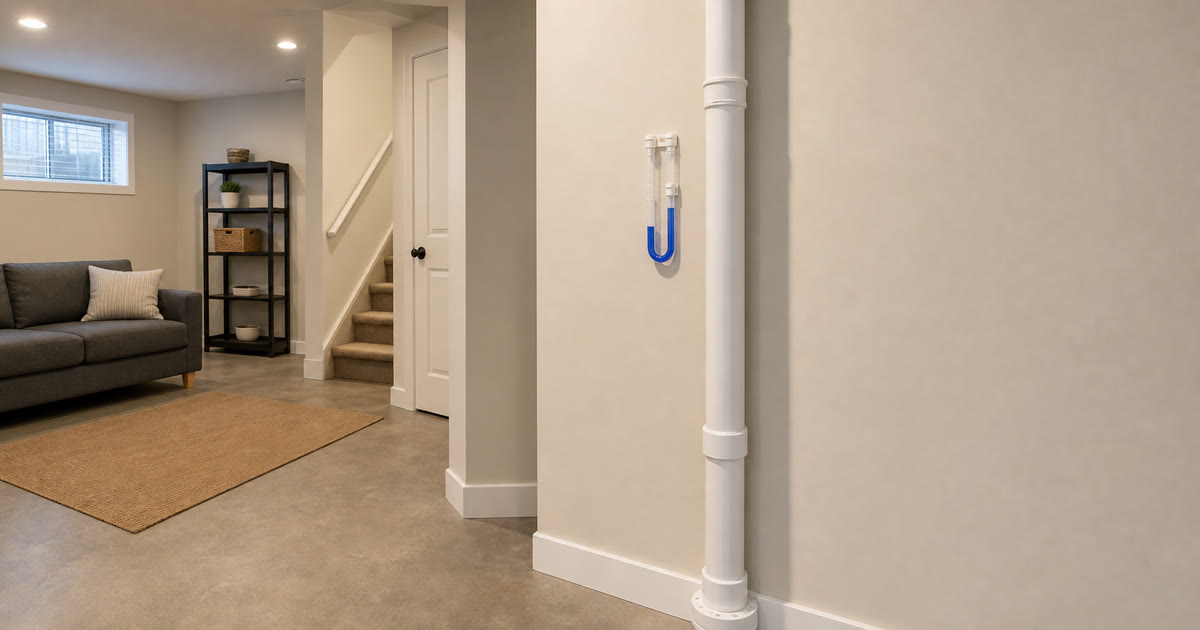
Every professionally installed radon mitigation system in Calgary comes with a manometer — typically a small U-shaped tube of coloured liquid mounted on the pipe at eye level. It looks low-tech, and it is, by design. No batteries. No electronics. Just physics.
How to read it: The liquid in the two sides of the U-tube sits at different heights when the fan is running and pulling suction. The offset between the two columns is your system's "heartbeat." This height difference should be visible at a glance.
What normal looks like: After installation, your C-NRPP certified professional marks the baseline reading. From that day forward, any time you walk past the system, a quick glance tells you the fan is working. Uneven liquid = running. Level liquid = stopped.
How often to check: Once a week is more than enough. Many Calgary homeowners make it a laundry-day habit — the pipe is often in the utility room anyway. In neighbourhoods like Brentwood, Haysboro, or Acadia where basements double as living space, the manometer is visible enough that checking it becomes second nature.
When the Manometer Shows Zero
If the liquid levels out evenly, the fan has stopped. This is not a "wait and see" situation. Without active suction, radon can re-enter the home — sometimes within hours.
Common causes in Calgary homes:
- Power loss: The fan is plugged into a dedicated outlet. If the breaker tripped or an outlet was switched off, the fan stops. Calgary's occasional summer thunderstorms and winter chinook wind events can cause brief outages.
- Fan failure: Radon fans last 10 to 15 years [ПРОВЕРИТЬ: точный средний срок службы по данным производителей], but like any mechanical device, they can fail earlier. Bearings wear out. Motors burn.
- Blocked discharge: In Alberta winters, ice or snow can sometimes build up at the roof discharge point, creating back-pressure that reduces or stops airflow.
- Disconnected power: It happens — someone unplugs the fan while working in the utility room and forgets to plug it back in.
What to do: Check the power first. If the outlet is live and the breaker is on, call a C-NRPP certified professional. Onyx Radon services systems across the Calgary area and can diagnose and restore your protection quickly.
Radon Fan Lifespan: When Replacement Is Needed
The fan is the only moving part in the entire system. It is engineered to run continuously for years, but it is not eternal. The typical service life is approximately 10 years, though Calgary's climate — with chinook-driven temperature swings and dry air — can influence longevity in either direction.
Signs your fan is nearing end of life:
- A gradual increase in noise — a hum that was once nearly silent becomes noticeable
- Vibration that was not present before
- Intermittent start-stop behaviour
- A subtle but consistent decline in manometer pressure over weeks
Fan replacement is straightforward: the old fan is removed from its housing, a new one is fitted and wired, and the system is back online — typically in under an hour. The cost of a replacement fan unit, installed by a C-NRPP professional in Calgary, is modest compared to the cost of living with elevated radon.
Re-Testing: How Often Should You Test After Mitigation?
This is the most overlooked part of radon system ownership. A working fan does not guarantee acceptable radon levels — it only guarantees airflow. The only way to know your actual radon exposure is to test.
Health Canada recommends re-testing every two years after mitigation [ПРОВЕРИТЬ: точная рекомендация Health Canada по периодичности повторного тестирования]. Some Calgary professionals recommend annual testing, especially in homes where:
- The initial pre-mitigation level was very high (above 600 Bq/m³)
- The home has undergone foundation work or basement renovations since mitigation
- The home is in a known high-radon pocket within Calgary or surrounding Alberta communities
A long-term test (90+ days) using an alpha-track detector gives the most reliable annual average. Short-term tests are useful for a quick spot-check but should not replace a proper long-term measurement.
Seasonal Considerations for Calgary Homeowners
Calgary's climate creates specific maintenance moments that differ from other Canadian cities. The stack effect — warm air rising and pulling soil gas upward — is strongest in winter, which is why radon levels spike during heating season. This also means your system works hardest from November through March.
Winter checklist for Calgary homes:
- After heavy snowfall: Verify the roof discharge point is clear. A buried vent can block exhaust and strain the fan.
- During chinooks: Rapid temperature shifts can cause ice to form and melt around exterior pipe penetrations. Check that seals at the wall or roof are intact.
- Deep freeze weeks: When Calgary hits –30°C, the fan's outdoor components work harder. A slight change in manometer reading during extreme cold is normal — but if it drops to near-zero, call a pro.
Summer checks:
- Storms in July and August can cause power surges. If the fan is on a GFCI circuit, a surge may trip it.
- Basement humidity changes in Calgary's dry summers do not affect the system directly, but any new cracks from soil settlement should be sealed.
Professional Inspections: Worth the Peace of Mind
Beyond your own weekly manometer glance, an annual professional inspection catches issues you might miss. A C-NRPP certified technician checks:
- Fan performance and pressure readings
- Pipe seals at every joint
- Discharge point clearance
- Foundation condition around the suction point
- Manometer calibration
- Sump pit cover seal integrity
For Calgary homeowners, this is especially valuable in older neighbourhoods — think Banff Trail, Killarney, or Inglewood — where homes are 50+ years old and foundations shift over time, potentially creating new radon entry pathways that did not exist when the system was first installed.
What Happens If You Ignore Maintenance?
A neglected radon system tends to fail silently. Because radon is invisible, odourless, and tasteless, there are no immediate symptoms to alert you. A failed fan could leave your Calgary home unprotected for months — even years — without anyone noticing.
Health Canada data attributes approximately 3,200 lung cancer deaths per year in Canada to radon exposure, making it the second leading cause of lung cancer after smoking. A mitigation system that is not maintained is no better than no system at all.
Quick Maintenance Reference for Calgary Homeowners
| Task | Frequency | Who |
|---|---|---|
| Check manometer | Weekly | Homeowner |
| Long-term radon re-test | Every 1–2 years | Homeowner or professional |
| Professional system inspection | Annually | C-NRPP certified pro |
| Fan replacement | ~Every 10 years | C-NRPP certified pro |
| Visual check of discharge point | After major storms | Homeowner |
| Foundation seal check | Annually, before winter | Homeowner |
The Bottom Line
Radon mitigation system maintenance in Calgary is not complicated. Glance at the manometer once a week. Test your radon levels every year or two. Have a professional inspect the system annually. Replace the fan roughly once a decade. These four habits cost almost nothing and take almost no time — and they ensure the system you invested in actually protects your family for the long haul.
Onyx Radon provides C-NRPP certified radon mitigation installation, maintenance, and inspection across Calgary and the surrounding Alberta region. Whether you need a system check, a re-test, or a fan replacement, our team keeps Calgary homes safe — year after year.
Related radon guides
DIY Radon Mitigation: Why Calgary Homeowners Should Think Twice
Thinking of installing your own radon system to save money in Calgary? Learn the hidden risks of DIY radon mitigation, why C-NRPP certification matters, and what Alberta homeowners really put on the line.
Radon Mitigation for Basements and Dirt Crawlspaces in Calgary
How radon mitigation works for finished basements and dirt-floor crawlspaces in Calgary homes, including sub-membrane depressurization.
How Does a Radon Mitigation System Work? Sub-Slab Depressurization Explained
A plain-language explanation of how sub-slab depressurization removes radon from Calgary homes and why it is the gold-standard method.