How Often Should Calgary Homeowners Re-Test for Radon? A Complete Guide
You tested your Calgary home for radon. Maybe the result came back low and you breathed a sigh of relief. Maybe it was high and you installed a mitigation system. Either way, one question is almost certain to follow: when do I need to do this again?
Radon levels are not a "set it and forget it" measurement. They shift with the seasons, with changes to your home, and with the slow movement of soil and groundwater beneath your foundation. A single test — even a long-term one — is a snapshot, not a lifetime guarantee.
Here is exactly how often Calgary and Alberta homeowners should re-test for radon, based on Health Canada guidance and the realities of our local climate and geology.
Health Canada's Re-Testing Recommendation
Health Canada's official guidance is clear: homeowners should re-test for radon every two years, even if a previous test showed levels well below the 200 Bq/m³ guideline.
This recommendation exists because radon levels can change over time for reasons that are often invisible to the homeowner. Foundation settling opens new cracks. Soil conditions shift with groundwater. Renovations alter airflow. Even something as ordinary as replacing windows or adding insulation can change the pressure dynamics in your Calgary home — and with it, the rate at which radon is drawn from the soil.
Two years is the standard interval, but there are specific situations where you should test sooner. Let us walk through each scenario.
Scenario 1: After Installing a Radon Mitigation System
This is the most critical re-test. If you have installed a sub-slab depressurization (SSD) system — the gold standard for radon mitigation in Calgary — you need a post-mitigation test to confirm the system is working.
Health Canada recommends testing within 30 days of system installation. This is often called a "clearance test" and it verifies two things: that the system is reducing radon to acceptable levels, and that the fan, piping, and sealing are all functioning as designed.
At Onyx Radon, we typically recommend a short-term test (48–72 hours) for the initial clearance, followed by a long-term test (90 days or more) to confirm performance across seasonal conditions. Calgary's winters create strong stack effect pressures inside homes, and a system that performs adequately in summer may be tested more severely when the temperature drops to –20°C in January.
After the initial clearance test, follow the standard two-year re-testing schedule — unless you notice the system's manometer reading change, in which case test immediately.
Scenario 2: After Any Major Renovation or Structural Change
Renovations are one of the most common reasons radon levels shift — and Calgary homeowners do a lot of renovating. Our city's housing stock spans decades, from 1950s bungalows in Brentwood and Haysboro to 2010s infills in Altadore and Killarney, and renovations are a constant across all of them.
Re-test for radon after:
- Basement finishing or renovation. Adding drywall, flooring, and electrical work changes airflow patterns and can seal or unseal radon entry paths. A finished basement also means more time spent on the lowest level, increasing exposure if radon is present.
- Foundation work. Repairing foundation cracks, adding a sump pump, or waterproofing your basement can all affect radon entry. Even beneficial repairs can accidentally create new pathways.
- Window and door replacements. Modern airtight windows and doors reduce drafts — which is excellent for energy bills but can trap radon indoors. The tighter the envelope, the higher the potential for radon accumulation. This is especially relevant in Calgary, where energy retrofit programs encourage sealing homes against our cold winters.
- HVAC changes. Installing a high-efficiency furnace, adding a heat recovery ventilator (HRV), or reconfiguring ductwork can all shift pressure balances inside your Calgary home.
- Adding an addition or extension. Any change to your home's footprint or foundation creates new soil-structure interfaces where radon can enter.
A good rule of thumb for Calgary and Alberta homeowners: if your renovation involved a building permit, re-test for radon when it is complete.
Scenario 3: When Your Neighbourhood or Region Shows Rising Trends
Radon risk is not uniform across Calgary, but it is widespread. The 2024 Cross-Canada Radon Survey found approximately 15.5% of Calgary homes testing at or above the 200 Bq/m³ guideline. Some neighbourhoods see rates above 20%, including areas with older housing stock built before radon was on anyone's radar.
Communities like Bowness, Montgomery, Acadia, Falconridge, Forest Lawn, Marlborough, and Southwood have thousands of homes from the mid-20th century — an era when sump pits were unsealed, slabs were poured without vapour barriers, and radon was barely understood. Even in newer Calgary communities such as Seton, Legacy, and Livingston, where building code now requires a radon rough-in, testing remains essential because the rough-in is passive piping — not an active system — and does nothing unless a fan is added.
When new radon data emerges for Alberta — such as updated Health Canada surveys or University of Calgary research — pay attention. If your neighbourhood shows elevated risk, re-test even if you are within your two-year window.
Scenario 4: Before and After Selling Your Home
If you are buying a home in Calgary, insist on a radon test as part of your due diligence — preferably a long-term test. Do not rely solely on the seller's test result. Radon levels shift, and a low reading from three years ago does not guarantee low levels today.
If you are selling, a recent radon test (within the last 12 months) can be a selling feature. It signals to buyers that you have taken the invisible risk seriously. In Alberta's real estate market, radon awareness is growing, and a documented low-radon result removes one uncertainty from the negotiation table.
If you are a realtor in Calgary, advising clients to test and re-test is a value-add that builds trust — and it protects everyone from the liability of an undiscovered radon problem after the transaction closes.
Scenario 5: When Life Changes — Especially with Kids
Our lifestyle inside the home matters as much as the home itself. Re-test for radon when:
- You start using your basement as living space. A basement that was once just storage may become a home office, a playroom, or a guest suite. In Calgary, where basement development is extremely common, this is a frequent trigger for re-testing.
- A new baby arrives. Children are more radiosensitive than adults — their lungs are still developing, and they breathe more air per kilogram of body weight. If your last radon test was before children, re-test now.
- Elderly parents move in. Older adults often spend more time at home and may have reduced respiratory resilience. A home that was "fine" for a healthy 35-year-old warrants a fresh test for a 75-year-old.
Radon is the second leading cause of lung cancer after smoking, responsible for approximately 3,200 deaths per year in Canada. Re-testing is not about paranoia — it is about matching your protective measures to your household's actual risk profile.
Best Time of Year to Re-Test in Calgary
If you are going to test once, test during heating season — roughly October through April in Calgary. This is when the stack effect is strongest: warm indoor air rises and escapes through the upper levels of your home, creating negative pressure at the basement that pulls soil gases — including radon — indoors.
Calgary's winters are not merely cold; they are long. With overnight temperatures routinely dropping to –15°C or lower from November through March, the temperature difference between indoors and outdoors drives a powerful stack effect that can dramatically increase radon entry. A home that reads 80 Bq/m³ in August could read 250 Bq/m³ in February. Testing during winter gives you the worst-case scenario, which is exactly what you want to know.
Summer testing is not useless — it will still detect radon — but a summer-only result may underestimate your annual average exposure. If your only test was done in July or August, consider a winter re-test for confirmation.
Long-Term vs Short-Term Re-Tests
For re-testing, Health Canada's preference is the same as for initial testing: a long-term test of 90 days or more using an alpha-track detector. Long-term testing smooths out day-to-day fluctuations caused by weather, ventilation habits, and seasonal effects. It gives you a reliable annual average.
Short-term tests (48–72 hours) have their place in re-testing — specifically for post-mitigation clearance tests, or when you need a quick screening before a real estate transaction. But for routine re-testing every two years, a long-term test provides the most actionable result.
A C-NRPP certified radon professional in Calgary can guide you on which approach fits your situation. The key is to test, not to guess.
Setting Up a Re-Testing Schedule: A Simple Calendar for Calgary Homeowners
Here is a straightforward re-testing rhythm that works for most Calgary and Alberta homes:
| Trigger | When to Re-Test | Test Type |
|---|---|---|
| Routine re-test (no changes) | Every 2 years, during heating season | Long-term (90+ days) |
| After mitigation system installed | Within 30 days, then at 12 months | Short-term clearance, then long-term |
| After basement or major renovation | Within 60 days of completion | Long-term |
| After foundation or HVAC work | Within 60 days | Long-term |
| New baby or elderly family member | Immediately, regardless of last test date | Long-term |
| Buying a Calgary home | Before closing, ideally 90 days | Long-term |
| Selling your Calgary home | Within 12 months of listing | Long-term |
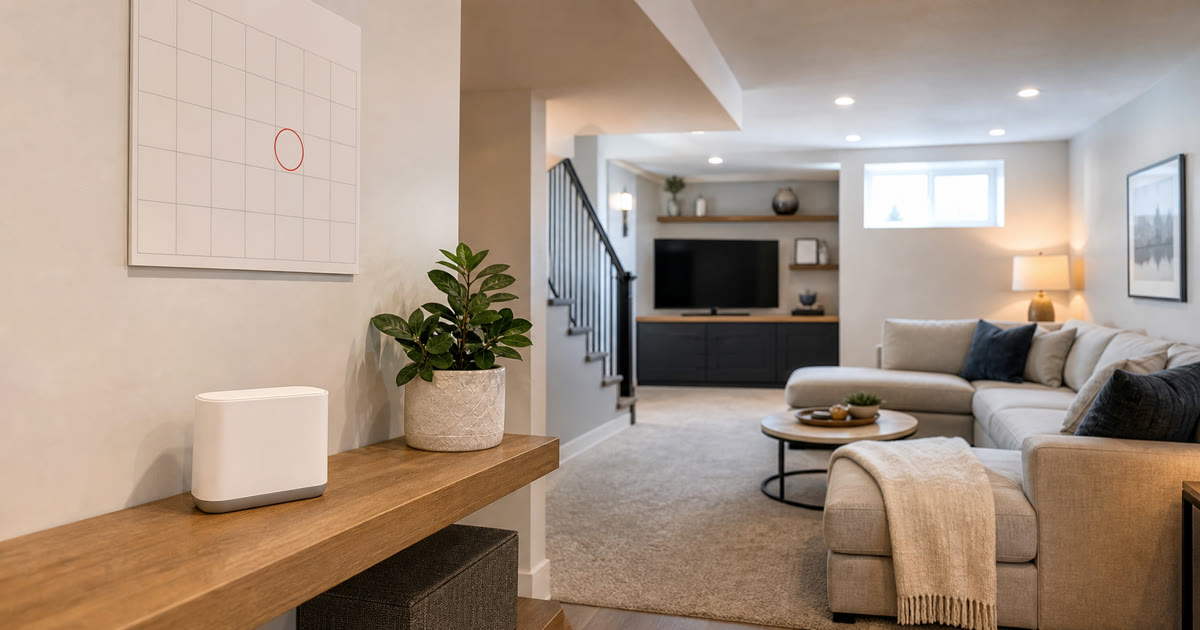
Put a recurring reminder in your calendar every two years in October — the start of Calgary's heating season. If you have a mitigation system, add a second reminder to check the manometer quarterly.
Calgary Neighbourhoods That Should Be Extra Diligent
While every Calgary home should follow the two-year re-testing guideline, some neighbourhoods have characteristics that justify extra diligence:
- River-adjacent communities — Bowness, Montgomery, Inglewood, Ramsay, Beltline — where groundwater movement and alluvial soils create dynamic soil conditions that can shift radon pathways over time.
- Older established neighbourhoods — Brentwood, Haysboro, Acadia, Falconridge, Forest Lawn, Marlborough, Southwood — where mid-century foundations are now 50–70 years old and more likely to have developed cracks and gaps.
- Split-level and bi-level homes — common across Calgary from Braeside to Beddington — where complex foundation configurations create multiple soil-contact zones and potential entry points.
- Homes on sloped lots — common in Cougar Ridge, West Springs, Parkland, and Lake Bonavista — where walkout basements and grade changes affect soil gas pressure dynamics.
This is not a list of "danger zones" where radon is guaranteed. It is a reminder that radon risk in Calgary is shaped by geology, home design, and building age — and that re-testing is how you stay informed as conditions shift.
The Bottom Line
Radon testing in your Calgary home is not a one-and-done task. It is a periodic health check — simple, affordable, and one of the most impactful things you can do to protect your family from an invisible but proven cancer risk.
Health Canada says every two years. Re-test sooner after any major renovation, after installing mitigation, or when your household changes in ways that increase exposure risk. Test during Calgary's heating season for the most conservative result.
With roughly 1 in 6 Calgary homes above the 200 Bq/m³ guideline and approximately 3,200 radon-related lung cancer deaths per year across Canada, the cost of re-testing — a modest investment every two years — is negligible compared to the cost of not knowing.
At Onyx Radon, we help Calgary and Alberta homeowners stay on top of their radon levels with certified testing and, when needed, professionally designed mitigation systems. Know your number. Re-test on schedule. And breathe easier knowing you are not leaving your family's lung health to chance.
Related radon guides
DIY Radon Test Kits vs Professional Testing: Which Is Right for You?
Compare DIY radon test kits and professional radon testing in Calgary, including accuracy, cost, and when each option makes sense.
Short-Term vs Long-Term Radon Testing: Which One Do You Need?
Understand the difference between short-term and long-term radon tests, and learn which one suits your situation in Calgary.
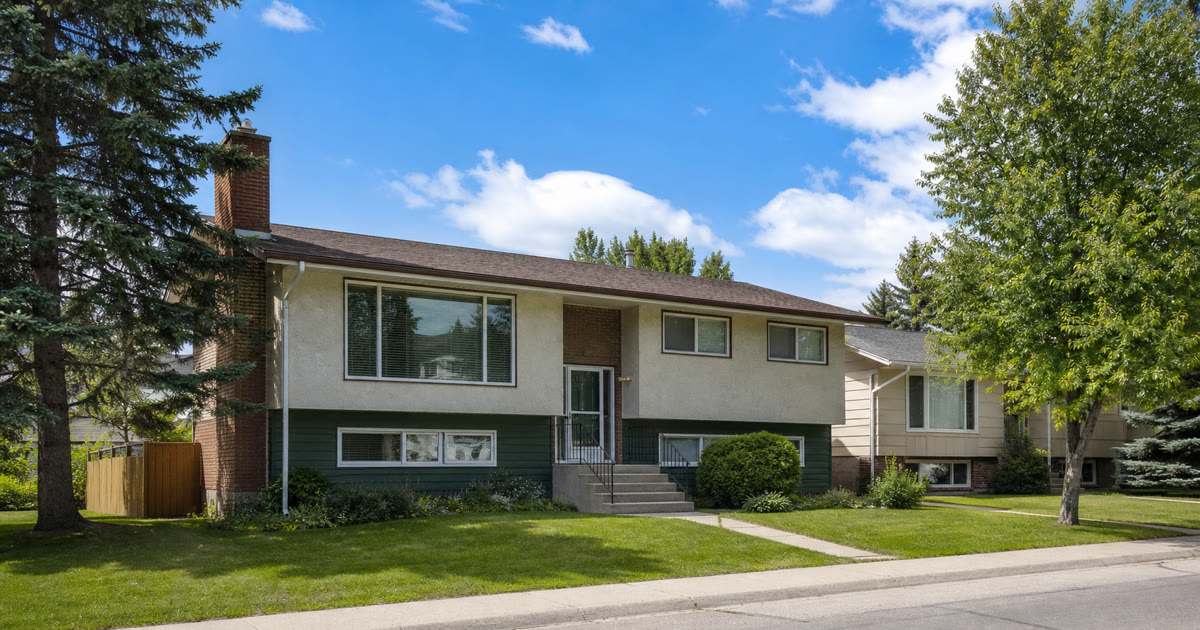
Radon in Calgary Split-Level and Bi-Level Homes: What Makes Them Different
Split-level and bi-level homes dominate Calgary's 1960s–1980s neighbourhoods. Their unique foundation design creates specific radon entry challenges that detached bungalows and two-storeys don't share. A guide for Calgary and Alberta homeowners.