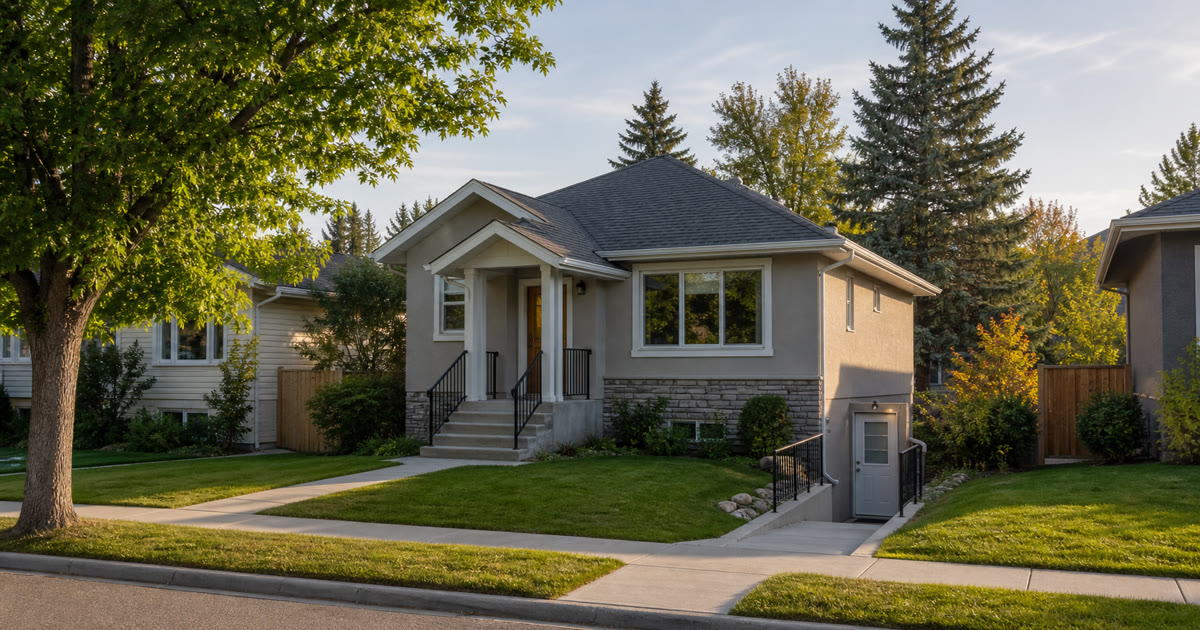
Radon in Calgary Rental Properties: A Practical Guide for Tenants and Landlords
Radon does not care who owns the deed. Whether you rent or own your Calgary home, the gas seeping up from Alberta's uranium-bearing soils enters through the same cracks, the same slab, and the same sump pit. Yet the conversation about radon in Calgary has largely been a homeowners' conversation — and that leaves out a big piece of the picture. Calgary's rental market is enormous: basement suites, single-family rentals, townhouse rentals, garden-level units, and apartment rentals together house tens of thousands of Calgarians. Every single one of those residents breathes indoor air. This guide covers what tenants need to know, what landlords should do, and where Alberta's rules stand right now.
The Calgary Rental Landscape and Why Radon Matters Here
Calgary's rental market includes roughly 30% of the city's households. That means over 140,000 Calgary families and individuals live in a property they do not own outright. The rental stock spans every neighbourhood, every foundation type, and every era of construction — from a 1960s bungalow basement suite in Brentwood to a brand-new purpose-built rental in Seton to a townhouse row in Mahogany. Radon geology does not skip rental properties.
The 2024 Cross-Canada Radon Survey found that approximately 17.8% of Canadian residential properties test at or above Health Canada's guideline of 200 Bq/m³. In Calgary, roughly 15.5% of homes exceed this threshold, with a city-wide average reading of 102.5 Bq/m³. Below-grade rooms — exactly where many Calgary basement suites and garden-level rentals are located — average 23.5% higher radon than main-floor rooms. Put those numbers together: if you are a Calgary renter in a below-grade unit, your statistical radon risk is meaningfully above the city average.
Tenant Rights in Alberta: What the Law Says (and Does Not Say)
Let's start with the honest reality. As of 2026, Alberta's Residential Tenancies Act does not explicitly address radon. There is no clause requiring landlords to test for radon, no mandatory disclosure of radon levels when signing a lease, and no legislated timeline for mitigation if a rental tests high. This puts Alberta behind jurisdictions that have begun incorporating radon into rental housing standards.
However, the absence of a radon-specific rule does not mean tenants are powerless. The Act does require landlords to maintain rental premises in a state of repair that complies with public health requirements. Section 16 of the Act obliges the landlord to keep the property habitable and to comply with health standards. Radon, as a known carcinogen responsible for approximately 3,200 lung cancer deaths per year in Canada, falls squarely into the realm of health and habitability — even if no Alberta regulation spells that out word-for-word yet.
Practically, this means a Calgary tenant who documents elevated radon levels and presents them to the landlord has a reasonable argument that mitigation is required for the property to remain safe for occupancy. A landlord who refuses to address a radon reading of, say, 450 Bq/m³ in a basement suite may find themselves on the wrong side of a Residential Tenancy Dispute Resolution Service complaint — particularly as radon awareness continues to grow in Alberta and the expectation of safe indoor air becomes a mainstream standard.
What Tenants Can Do: A Step-by-Step Calgary Guide
If you rent in Calgary and want to know whether radon is present in your unit, you do not need your landlord's permission to find out. Testing your own living space is within your rights, and it is the most empowering first step a renter can take.
Test Your Unit Yourself
A long-term radon test kit — what Health Canada recommends — costs roughly $40 to $60 and runs for 90 days or longer. Place the detector in the lowest lived-in area of your rental: the bedroom if you are in a basement suite in Acadia, the living room if you are on the ground floor of a townhouse in Falconridge. The test belongs to you, the results belong to you, and no one can stop you from running one. At the end of the testing period, you have a number — and that number changes the conversation from "should we worry" to "here is what we are dealing with."
Document and Communicate
If your result comes back above 200 Bq/m³, present it to your landlord in writing — email is best because it creates a record. Include a photo of the lab report, reference Health Canada's guideline, and request that they address the issue. Keep the tone collaborative, not adversarial: most Calgary landlords simply do not know much about radon, and your test result is often the first they have ever seen.
A sample approach: "I recently completed a long-term radon test in my unit at [address]. The result was [X] Bq/m³, which is above Health Canada's guideline of 200 Bq/m³. Radon is the second-leading cause of lung cancer in Canada. I wanted to bring this to your attention and ask that we discuss next steps for mitigation. I am happy to share resources about certified radon professionals in Calgary who can help."
If the Landlord Refuses
If a Calgary landlord refuses to mitigate a documented high radon level, the tenant has options. The Residential Tenancy Dispute Resolution Service (RTDRS) can hear complaints about maintenance and health standards. A tenant can also contact Alberta Health Services Environmental Public Health for guidance — while they do not regulate indoor residential radon directly, they can provide supporting documentation about the health risk that strengthens the tenant's case. As of 2026, tenant advocacy organizations continue to push for explicit radon protections in Alberta's tenancy legislation; until those arrive, documentation, communication, and persistence are the best tools a Calgary renter has.
What Landlords Should Know: Radon Is a Business Risk
If you own rental property in Calgary, radon is not someone else's problem to raise. It is a liability sitting quietly beneath your foundation, and the smartest thing you can do is get ahead of it before a tenant comes to you with a 500 Bq/m³ reading and a demand letter.
The Business Case for Testing
Testing your Calgary rental property costs $40 to $80 per unit and gives you either peace of mind or a path to fix something before it becomes a dispute. If your basement suite in Haysboro tests at 40 Bq/m³, you now have documentation you can share with current and future tenants showing the property is safe — a competitive differentiator in Calgary's rental market. If it tests at 380 Bq/m³, you can mitigate before anyone gets hurt and before you face a complaint.
Mitigation Cost vs Liability Cost
A radon mitigation system for a typical Calgary single-family home — including a basement suite — runs in the range of $2,000 to $3,500. For a townhouse or smaller property, it may be less. Compare that to the cost of an RTDRS dispute, a tenant break-lease situation, or worst case, a liability claim related to long-term radon exposure. From a purely business perspective, the mitigation system is the cheaper option — and it adds value to the property.
C-NRPP Certification Matters
When you hire a radon professional in Calgary, look for C-NRPP certification. This is the Canadian national standard for radon measurement and mitigation professionals. A C-NRPP certified contractor understands Alberta's geology, Calgary's housing stock, and the sub-slab depressurization technique that is the gold standard for removing radon from beneath a foundation. Hiring uncertified help to save a few dollars is a false economy — and as a landlord, you want the paperwork trail of a certified installation if questions ever arise.
Disclosure Is Coming
Even though Alberta does not yet require radon disclosure in rental agreements, the trend across Canada is moving in that direction. The BC Lung Foundation and other health advocacy groups have called for mandatory radon disclosure in rental housing nationwide. Several US states already require it. A Calgary landlord who tests and mitigates voluntarily today is ahead of the regulatory curve — and when disclosure rules do arrive in Alberta, they will already be compliant.
Special Considerations for Calgary Basement Suites
Basement suites deserve their own section because they combine multiple risk factors into one rental unit. A basement suite in Calgary — whether a legal suite in a newer home in Livingston or a converted basement in an older bungalow in Forest Lawn — is:
- Below grade, meaning the closest occupied space to the soil source of radon.
- Often small and tightly sealed, especially in winter when the Calgary cold drives tenants to keep windows shut for months.
- Occupied for long continuous hours, with tenants sleeping, eating, and relaxing in a space where radon concentrations are naturally highest.
For a landlord renting a Calgary basement suite, testing is not optional due diligence — it is the bare minimum of responsible property management. For a tenant in a Calgary basement suite, a radon test should be as routine as checking that the smoke detector works.
One practical tip for Calgary basement suite landlords: if you are already planning a renovation between tenants, install a radon rough-in (a capped pipe from the sub-slab gravel layer up through the unit) while the walls are open. Your future self — and your future tenants — will thank you.
Townhouse and Row-House Rentals in Calgary
Townhouse rentals in Calgary communities like McKenzie Towne, Auburn Bay, or Panorama Hills occupy a middle ground. Most townhouses sit on a slab-on-grade foundation without a full basement, which means less soil contact area than a detached home. However, a slab is still a concrete surface sitting directly on Alberta's radon-producing geology, and utility penetrations through the slab create entry pathways.
Townhouse renters in Calgary should not assume they are automatically in the clear. With 15.5% of Calgary homes testing above the guideline, the only way to know whether a townhouse rental has a radon issue is to test it. Landlords of Calgary townhouse complexes should consider building-wide testing, particularly for ground-floor units — a single coordinated effort is far more efficient than fielding individual tenant requests one by one.
The Calgary Neighbourhoods Where Radon and Rentals Intersect Most
Radon does not respect neighbourhood boundaries, but areas with the highest concentration of rental properties are where this issue matters most at scale.
Beltline, Mission, and Sunnyside — high-density apartment and condo rentals, many in buildings from the 1960s through 1980s. Ground-floor units in these Calgary neighbourhoods should be tested, particularly in older walk-up buildings with unsealed foundations.
Brentwood, Haysboro, and Acadia — mature Calgary communities with a significant number of single-family homes converted into basement suites and upper/lower rental arrangements. Basement tenants in these neighbourhoods are in the highest-risk demographic for radon exposure.
Forest Lawn, Marlborough, and Rundle — older housing stock in Calgary's northeast and east, often with developed basements rented as suites. Foundation cracks, unsealed sumps, and aging concrete are common entry points.
Seton, Mahogany, and Skyview Ranch — newer Calgary rental communities where energy-efficient construction may be trapping radon inside airtight envelopes. New-build does not mean radon-free.
What a Healthy Radon Conversation Between Calgary Tenant and Landlord Looks Like
Radon does not need to be an adversarial topic. In most cases, the Calgary tenant who discovers elevated radon is doing the landlord a favour — they are identifying a property issue that affects the asset value and that the landlord can fix permanently for a few thousand dollars. The ideal scenario looks like this:
- Tenant tests and shares results.
- Landlord acknowledges the result and contacts a C-NRPP certified radon professional in Calgary.
- The professional conducts a follow-up diagnostic assessment and designs a mitigation system.
- Mitigation is installed — a sub-slab depressurization system, typically completed in one day for a standard Calgary home.
- A post-mitigation test confirms levels have dropped below 200 Bq/m³ — often below 50 Bq/m³ — and both parties have documentation showing the property is safe.
Everyone wins. The tenant gets clean air. The landlord gets a documented, mitigated property with one less liability on the books. And the Calgary rental market as a whole takes one more step toward the day when radon testing is as routine as a furnace inspection.
The Bottom Line
Radon in Calgary rental properties is not a niche issue — it is a mainstream health consideration that affects tens of thousands of Calgarians who do not own the roof over their heads. Tenants have the right to test their own living space and to expect a safe indoor environment. Landlords have both a moral and a business interest in getting ahead of the problem before it becomes a crisis.
If you are a Calgary tenant, spend the $60 on a long-term test kit and know your number. If you are a Calgary landlord, test your properties proactively and document the results — it is the single most cost-effective risk management decision you can make for your rental portfolio. At Onyx Radon, our C-NRPP certified team provides radon testing and mitigation for all residential property types across Calgary and Alberta, including rental units of every configuration. Clean air is not a luxury, and in Calgary, it starts with knowing what is beneath your floor.
Related radon guides
Selling Your Calgary Home: How to Pass a Radon Test
A seller's guide to radon testing when listing your Calgary home, how to handle a high result, and how to keep your sale on track.
Radon Testing When Buying or Selling a Home in Alberta
How radon testing fits into Alberta real estate transactions, what buyers and sellers should know, and how to handle it on a timeline.
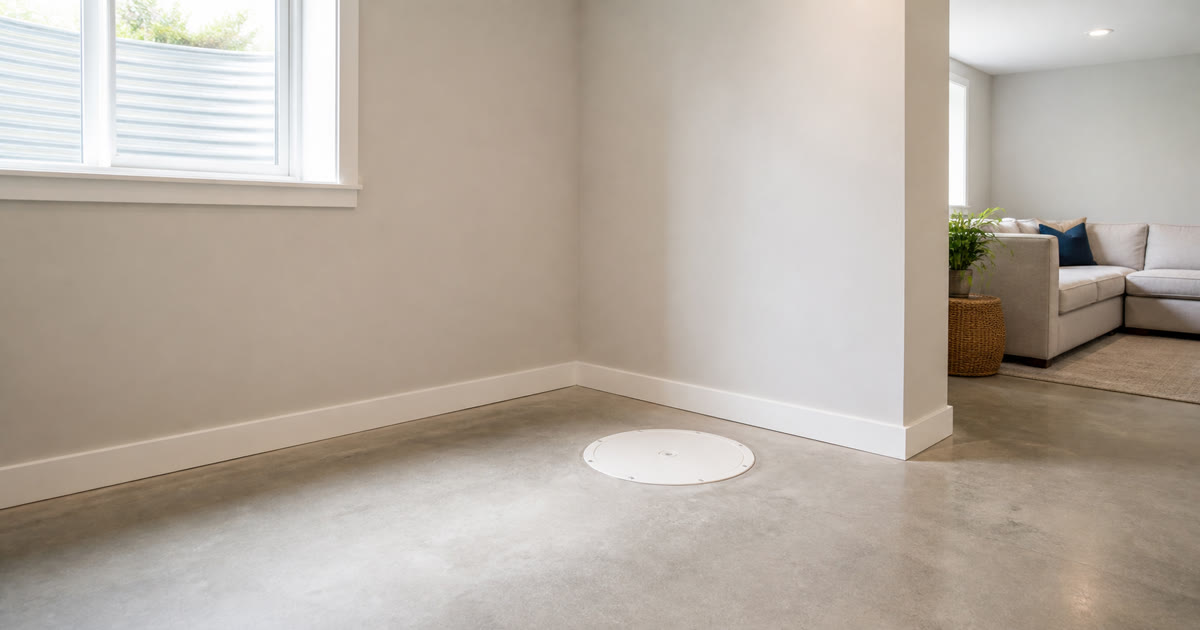
Sump Pump Pits: Calgary's Hidden Radon Entry Point
Your sump pump pit could be a direct pathway for radon to enter your Calgary home. Learn how to identify the risk, seal it properly, and protect your family from this invisible gas.