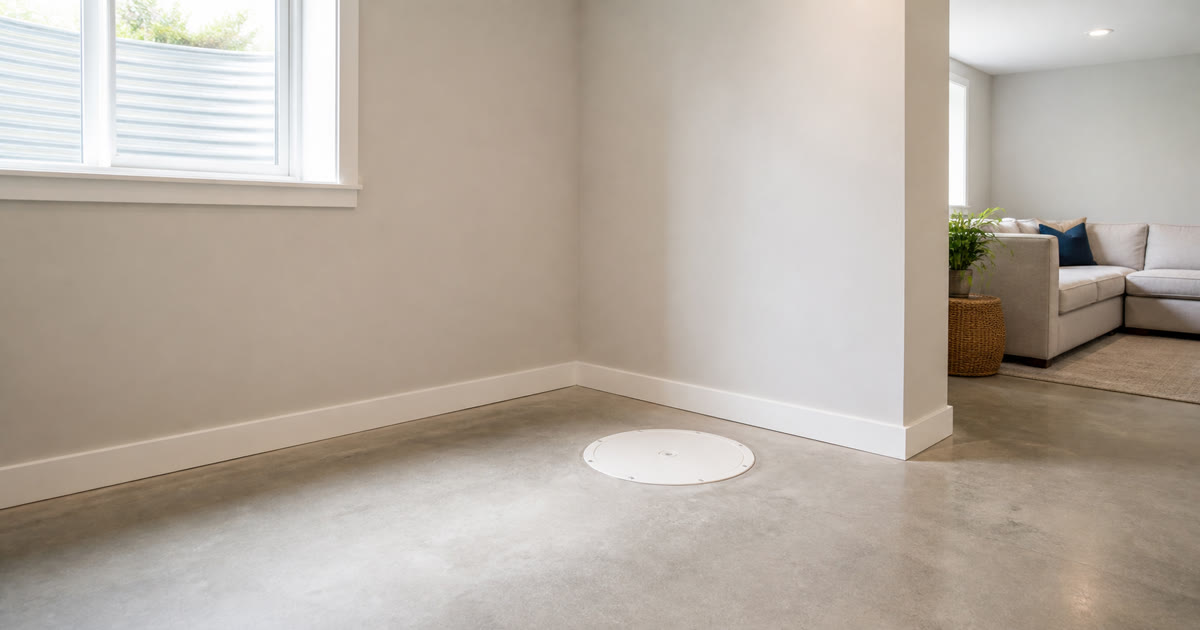
Sump Pump Pits: Calgary's Hidden Radon Entry Point
If you own a home in Calgary, there is a good chance you have a sump pump — and if you do, you probably think of it as protection against basement flooding. You are right. But that same sump pit is also a potential highway for radon gas to enter your home.
Calgary's geology gives us two challenges: uranium-bearing soils that produce radon, and groundwater conditions that make sump pumps common in neighbourhoods across the city. When these two features meet in your basement, the result can be dangerously high radon levels — levels you will not smell, see, or feel.
Why Calgary Homes Have So Many Sump Pumps
Sump pumps are widespread in Calgary for good reason. Our city sits at the confluence of the Bow and Elbow rivers, with alluvial soils, glacial till, and variable water tables across different neighbourhoods. Spring snowmelt, summer thunderstorms, and the occasional chinook-driven rapid thaw can all send groundwater toward basements.
Communities like Bowness, Montgomery, Inglewood, Ramsay, and parts of Beltline sit close to the river valleys and have historically dealt with higher water tables. But even homes far from the rivers — in Brentwood, Haysboro, Acadia, or Falconridge — often have sump pumps because Calgary's building practices have long recognized the wisdom of keeping groundwater managed.
A sump pump is excellent at its job. But here is what many Calgary homeowners do not realize: a standard sump pit is an open hole in your basement floor. It goes straight down into the soil. And radon — a radioactive gas produced by decaying uranium in that same soil — sees that open pit as an invitation.
How Radon Uses Your Sump Pit
Radon is a gas. It moves from the soil into your home through any opening it can find: cracks in the foundation slab, gaps around utility pipes, expansion joints — and sump pits.
Think about the physics for a moment. Warm air rises inside your Calgary home during the winter, creating a slight negative pressure at the basement level. This is called the stack effect, and it is especially strong in Alberta during our cold months. That negative pressure draws soil gases — including radon — upward through every available pathway.
Your sump pit is a pathway with a direct, unobstructed connection to the soil. It is essentially a window into the ground beneath your foundation. Unless it is properly sealed, radon enters through that pit, mixes with the air in your basement, and circulates through your home.
The 2024 Cross-Canada Radon Survey found that approximately 15.5% of Calgary homes test at or above Health Canada's guideline of 200 Bq/m³. An unsealed sump pit is one of the most common contributing factors in homes with elevated readings — and also one of the easiest to fix.
What a Properly Sealed Sump Pit Looks Like
Sealing a sump pit for radon is not as simple as putting a board over the hole. A radon-tight sump cover must:
- Create an airtight seal around the entire perimeter of the pit
- Accommodate the pump's discharge pipe and power cord with sealed penetrations
- Allow for occasional inspection and pump maintenance without destroying the seal
- Be made of durable material that will not warp or crack over time
Manufactured sump pit covers designed for radon control are available and are the best solution. They typically use a rigid plastic or composite lid with a rubber gasket and sealed penetrations for pipes and cords. In many Calgary homes, a qualified professional can install one in a single visit.
The cost is modest — typically a few hundred dollars — but the impact on radon levels can be dramatic. In some homes, sealing the sump pit alone can significantly reduce radon levels, though a follow-up test is always necessary to confirm the result.
Sealing the Sump Pit vs Full Mitigation: Know the Difference
This is where Calgary homeowners need to be clear. Sealing your sump pit is an important step, but it is not the same as a full radon mitigation system.
A sealed sump cover closes one entry point. A sub-slab depressurization (SSD) system — the gold standard for radon mitigation — actively draws radon from beneath your foundation and vents it safely above your roofline before it ever enters your home. An SSD system may still be necessary even with a sealed sump pit, especially if your radon test shows levels well above 200 Bq/m³.
Which approach you need depends on your test results. A C-NRPP certified radon professional in Calgary can assess your home, measure radon levels, and recommend the right solution. Some homes with mildly elevated radon may pass after a sump pit seal alone. Others will need the full system. The only way to know is to test, seal, and test again.
Other Hidden Entry Points in Your Calgary Basement
Your sump pit gets special attention because it is a large, obvious opening — but it is rarely the only one. When you are addressing radon entry in your Calgary home, look for these additional pathways:
- Floor cracks — Concrete slabs crack over time, especially in Calgary where freeze-thaw cycles and shifting glacial till soils stress foundations. Even hairline cracks let radon through.
- Gaps around plumbing and utility penetrations — Where pipes, conduits, and sewer lines pass through the slab, the gap around them is a radon pathway.
- Floor drains — If the water trap in a floor drain dries out, radon can pass through unimpeded.
- Hollow core foundation walls — Common in many Calgary homes, these blocks create vertical channels that can funnel radon up from the footing.
- Expansion joints — The intentional gaps between sections of your basement slab can open just enough for radon to seep through.
A thorough radon mitigation strategy in any Calgary or Alberta home addresses all of these, not just the sump pit. But the sump pit is often the biggest single contributor — and the first place a professional will look.
Is Your Calgary Home at Risk? What to Do Next
If you have a sump pump in your Calgary basement, here is a practical action plan:
- Check your sump pit. Is the lid loose? Is it just a piece of plywood? Is there a gap around the discharge pipe? If the answer to any of these is yes, your sump pit is likely contributing to your home's radon level.
- Test your radon. The only way to know your radon level is to test. A long-term test (90 days or more) provides the most reliable average, and Health Canada recommends placing one on the lowest lived-in level of your home — often the basement in Calgary.
- If your result is above 200 Bq/m³, act. Seal the sump pit with a proper radon-rated cover. If levels remain elevated after sealing, a C-NRPP certified professional can design and install a full mitigation system tailored to your Calgary home.
- Re-test after any changes. Sealing your sump pit or installing mitigation means you need a follow-up test to confirm the fix worked.
Neighbourhoods Where Sump Pump Radon Risk Matters
While radon risk does not respect neighbourhood boundaries, Calgary communities with older housing stock and high sump pump prevalence deserve particular attention. Neighbourhoods like Bowness, Montgomery, Brentwood, Haysboro, Acadia, Falconridge, Forest Lawn, Southwood, and Marlborough all have thousands of homes built in an era when sump pits were installed without radon control in mind. Newer communities — Seton, Legacy, Cornerstone, Livingston — may benefit from improved building code awareness, but a sump pit without a sealed cover is still a radon risk regardless of when the home was built.
Across Alberta, the geology that produces radon does not discriminate by postal code. But Calgary's unique combination of river-valley topography, variable water tables, and widespread sump pump use makes this a particularly relevant issue for local homeowners.
The Bottom Line
Your sump pump is a loyal appliance — it protects your Calgary basement from water damage. But that same sump pit can quietly let radon into your home 24 hours a day, 365 days a year. The good news is that this is one of the most straightforward radon entry points to address: a proper sealed cover costs a fraction of what a flooded basement would, and it can meaningfully lower your radon exposure.
With roughly 1 in 6 Calgary homes testing above Health Canada's 200 Bq/m³ radon guideline, and approximately 3,200 lung cancer deaths attributed to radon each year across Canada, this is not a theoretical concern. It is a fixable risk hiding in plain sight — or more accurately, hiding under a loose cover in your basement.
If your Calgary home has a sump pump, start with a radon test. At Onyx Radon, our C-NRPP certified team knows the local geology, the local building practices, and the right approach for homes throughout Calgary and Alberta. Know your number, seal your entry points, and breathe easier in your home.
Related radon guides
Radon in Energy-Efficient Calgary Homes: The Airtight Paradox
Energy-efficient airtight homes in Calgary can trap more radon, not less. Learn why sealing your home against cold may increase radon levels and what to do about it.
When Did Radon Become a Concern in Alberta? A Timeline of Awareness and Action
How radon went from an obscure geological curiosity to a public health priority in Alberta. The key events, studies, and policy shifts that shaped radon awareness in Calgary and across the province.
Radon in Calgary Condos and Apartments: What Every Multi-Unit Resident Should Know
Think your Calgary condo is safe from radon? Ground-floor and basement units can have dangerous levels. Here's what condo owners, renters, and strata boards need to know about testing and mitigation.