Radon in Energy-Efficient Calgary Homes: The Airtight Paradox
You upgraded your Calgary home's insulation, replaced the windows with triple-pane glass, sealed every gap around the doors, and maybe even installed an HRV. Your energy bills dropped. Your home feels snug against those infamous Calgary winter winds. You did everything right. So here is a question you might not have asked: did all that air-sealing make your radon problem worse?
It is an uncomfortable truth that the energy-efficiency features Calgary homeowners prize — airtightness, improved insulation, minimal drafts — can trap more radon inside a home, not less. This is the airtight paradox, and it is catching a growing number of Calgary families off guard.
The Stack Effect: Why Tighter Homes Pull Harder
Every Calgary home is essentially a chimney. Warm indoor air rises and escapes through the upper levels — attic hatches, ceiling penetrations, bathroom fans. As that warm air exits, new air is pulled in from below to replace it: through the foundation, through cracks in the basement slab, through the soil. In building science, this is called the stack effect.
In a drafty, older Calgary home — think of a 1970s bungalow in Haysboro or Acadia — the air exchange rate is naturally high. Radon that seeps in from the soil gets diluted by fresh air leaking through windows, wall penetrations, and an unsealed rim joist. The radon concentration often stays lower than it otherwise would, simply because the house is leaky enough to flush itself.
Now upgrade that same bungalow. Spray-foam the rim joists, seal the attic, install airtight windows, add R-50 insulation. Suddenly, the house is not flushing itself anymore. The stack effect still pulls soil gas in through the foundation — the physics does not change — but the dilution is gone. The radon has nowhere to go except to accumulate. And accumulate it does.
What the Numbers Say: Energy Retrofits Can Raise Radon
This is not theoretical. Studies conducted in Canada and internationally have documented a measurable increase in indoor radon concentrations after energy-efficiency retrofits. A European study of homes in several countries found that median radon concentrations rose by roughly 20 percent after air-sealing and insulation upgrades, with some homes jumping far more dramatically. [ПРОВЕРИТЬ: точная цифра 20% — ссылка на конкретное исследование; Health Canada также публиковала данные по post-retrofit radon]
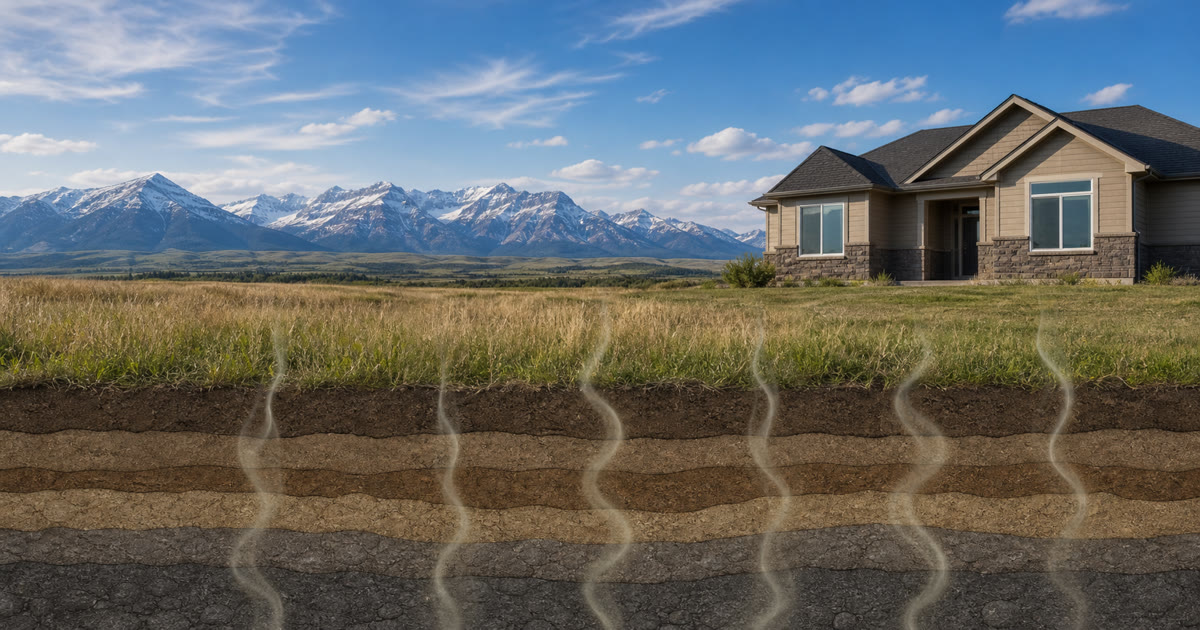
In the Calgary context, this pattern matters deeply. Alberta sits on uranium-rich glacial till — the geological signature that produces radon across the Prairie provinces. The soil beneath neighbourhoods like Brentwood, Falconridge, and Forest Lawn does not care whether your home is energy-rated or not; it produces radon continuously. An airtight Calgary home built on that soil is, in radon terms, a sealed container sitting on a steady gas source.
Health Canada's Cross-Canada Radon Survey found that roughly 7 percent of homes nationally exceed the 200 Bq/m³ guideline. In the Prairie region — which includes Calgary and all of southern Alberta — the percentage climbs significantly higher, with some estimates placing it in the 10 to 15 percent range. [ПРОВЕРИТЬ: точный процент по Prairie region из Cross-Canada Survey последней итерации] Factor in the accelerating trend toward energy retrofits across Calgary's existing housing stock, and the number of homes at risk almost certainly underestimates the present reality.
New Calgary Homes: Built Tight, Tested Less
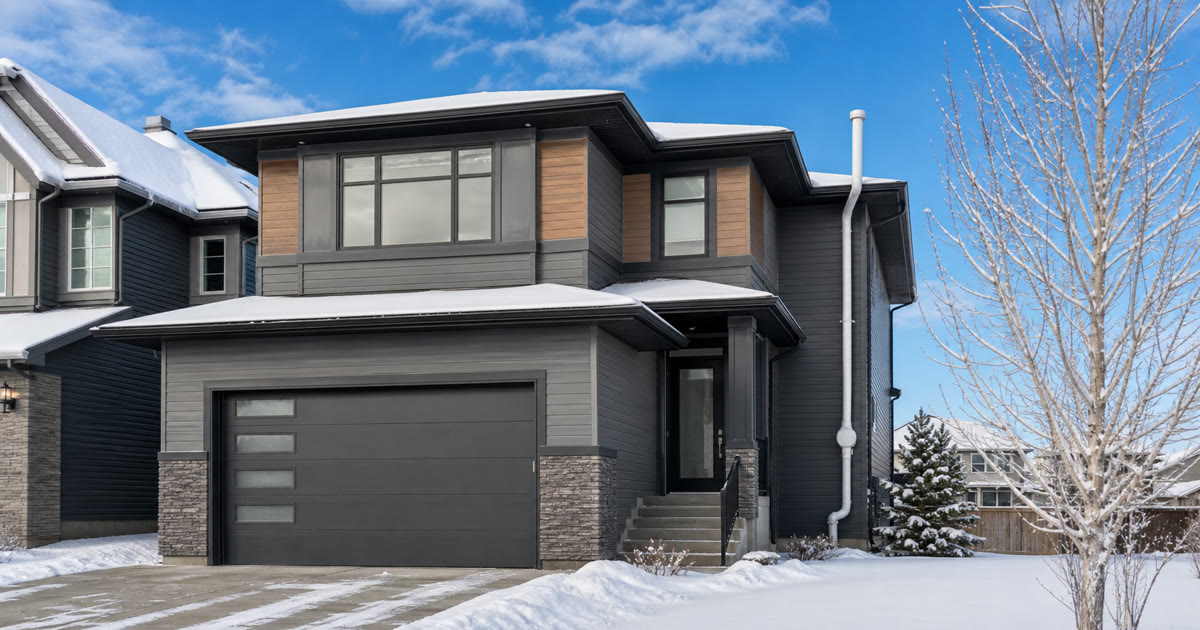
The airtight paradox also applies to new construction in Calgary. Modern Alberta homes are built to increasingly stringent energy codes. The National Energy Code for Buildings and Alberta's adoption of energy-efficiency standards mean that new Calgary homes — whether they are infills in Altadore, townhouses in Seton, or estate homes in Aspen Woods — are sealed to a degree that older Calgary homes never were.
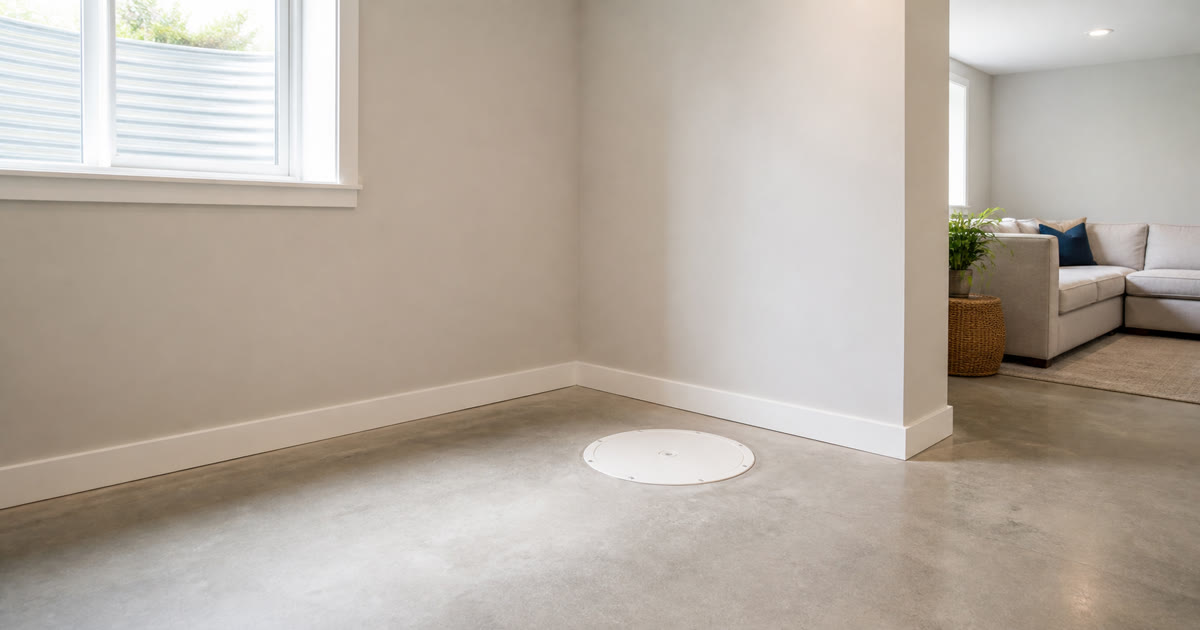
Newer Calgary homes are also required to include radon rough-ins under Alberta's building code: a pipe stub through the foundation slab, capped and labeled, ready for a future mitigation system. But a rough-in is not a guarantee. It is an invitation to test and, if necessary, to mitigate. The house itself — tight, efficient, and modern — is still pulling soil gas through the same stack effect, and without an active mitigation system, that rough-in does nothing but wait.
A recent survey of radon concentrations in new Canadian homes found that a meaningful percentage of homes built after 2010 still tested above 200 Bq/m³. [ПРОВЕРИТЬ: ссылка на исследование новых домов и радона — Evict Radon / University of Calgary данные] The takeaway for Calgary homeowners is clear: your home's age or energy rating tells you nothing about its radon level. Only a test tells you.
The Calgary Climate Factor
Calgary's climate intensifies the airtight paradox. Heating season in Calgary runs from October through April — and often stretches into May, as anyone who has lived through a spring snowfall in Calgary knows. During those seven-plus months, the temperature differential between indoors and outdoors is large, which strengthens the stack effect. The furnace runs, warm air rises, and the home pulls soil gas in with more force.
Add to this the chinook effect. Calgary's famous warm winter winds cause rapid barometric pressure shifts. When outside pressure drops during a chinook, the higher pressure inside the home pushes indoor air outward — and when the chinook passes, the reversal can pull a fresh surge of soil gas into the basement. This cycling, repeated through Calgary's chinook season, creates radon spikes that a short-term test can easily miss.
What Calgary Homeowners Should Do
If You Have Recently Upgraded Your Home's Energy Performance
Test for radon again — even if you tested years ago. The home you tested before the new windows and spray foam is not the same home you are living in now. Airflow has changed. The dilution rate is different. Radon levels that were once borderline may now be actionable. A long-term test of 90 days or more during the heating season is the Health Canada-recommended approach for Calgary homes.
If You Are Planning an Energy Retrofit
Test before the retrofit to establish a baseline, and test again after. This gives you a before-and-after picture of what the air-sealing did to your radon concentration. For Calgary homeowners in areas like Varsity, Lakeview, or Canyon Meadows — neighbourhoods with older housing stock that are seeing waves of energy upgrades — this two-point testing approach is especially wise.
If You Live in a Newer Calgary Home
That radon rough-in in your basement does not mean your home is safe. It means the builder followed code. The only way to know whether you need to use that rough-in is to test. New homes in Calgary — including those in communities like Mahogany, Evanston, and Cornerstone — are tight by design and can accumulate radon just as readily as older homes.
Mitigation Works in Airtight Homes — Exceptionally Well
Here is the good news. The same principle that makes an airtight Calgary home trap radon also makes mitigation highly effective. A sub-slab depressurization system — the C-NRPP certified gold standard for radon mitigation — creates negative pressure beneath the foundation slab and vents radon safely above the roofline. In an airtight home, the system does not compete with uncontrolled air leakage from dozens of random openings. The pressure field under the slab is cleaner and more uniform, often resulting in an 80 to 99 percent reduction in indoor radon levels.
In other words: an energy-efficient Calgary home with a properly installed radon mitigation system is the best of both worlds. Low heating bills and low radon. The two goals — energy performance and radon safety — are compatible when addressed deliberately. Left unaddressed, they work against each other.
A Checklist for Calgary Homeowners
- Test before and after any major air-sealing or insulation upgrade. Energy improvements change your home's air exchange and can raise radon. Know your before and after.
- Do not assume a new or recently renovated Calgary home is radon-safe. Tightness is not protection — it is concentration. Only a test gives you a real reading.
- Use long-term testing. A 90-day alpha-track detector placed in the lowest lived-in level of your Calgary home — whether that is a basement family room in Brentwood or a ground-floor den in Haysboro — gives the most reliable measurement of your family's average exposure.
- If your level is above the Health Canada guideline of 200 Bq/m³, install a mitigation system. In an airtight Calgary home, sub-slab depressurization is particularly effective and straightforward.
- Re-test after mitigation. Confirm the system works. Then re-test every two to five years, or after any future home renovations or major energy upgrades in your Calgary property.
- If you are building a new home in the Calgary area, discuss radon-resistant construction with your builder — not just a rough-in, but a full passive stack that can be activated with a fan if testing calls for it.
The Smart Calgary Home Is a Safe One
Energy efficiency and radon safety are not competing values. They are two sides of the same commitment to a healthy Calgary home. The mistake — and it is an easy one to make — is treating them as separate concerns. Sealing your home against Calgary's cold without testing for the gas that gets trapped inside is like installing a world-class security system and leaving the back door open.
At Onyx Radon, our C-NRPP certified team works with Calgary homeowners to make sure their energy-efficient homes are also radon-smart. Whether you have just completed an energy retrofit, are planning one, or simply want to know where your Calgary home stands, radon testing is the cheapest and most reliable starting point. Because the cosiest, most efficient home in Calgary is only truly comfortable when the air you breathe is as clean as your energy bills are low.
Related radon guides
Sump Pump Pits: Calgary's Hidden Radon Entry Point
Your sump pump pit could be a direct pathway for radon to enter your Calgary home. Learn how to identify the risk, seal it properly, and protect your family from this invisible gas.
When Did Radon Become a Concern in Alberta? A Timeline of Awareness and Action
How radon went from an obscure geological curiosity to a public health priority in Alberta. The key events, studies, and policy shifts that shaped radon awareness in Calgary and across the province.
Radon in Calgary Condos and Apartments: What Every Multi-Unit Resident Should Know
Think your Calgary condo is safe from radon? Ground-floor and basement units can have dangerous levels. Here's what condo owners, renters, and strata boards need to know about testing and mitigation.